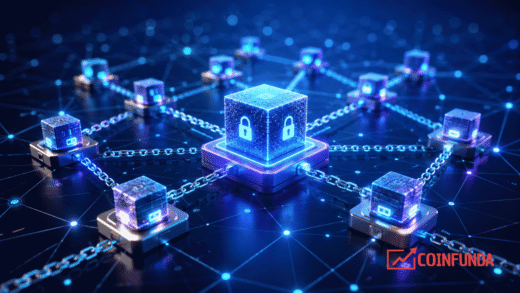

- Blockchain is a decentralized digital ledger that securely records transactions across a network of computers.
- Every transaction is verified through cryptography and consensus before becoming part of a permanent record.
- Blockchain powers cryptocurrencies like Bitcoin and Ethereum while supporting smart contracts, decentralized finance (DeFi), and asset tokenization.
- The technology improves transparency, security, and trust by removing the need for centralized intermediaries.
- Blockchain is transforming industries including finance, healthcare, supply chains, gaming, and digital identity.
Whenever someone sends Bitcoin to a friend, swaps tokens on Ethereum, or purchases a tokenized asset, blockchain quietly works in the background. It has become the foundation of cryptocurrencies, decentralized finance, NFTs, and many emerging Web3 applications.
Yet despite its growing influence, blockchain remains one of the most misunderstood technologies. Many people associate it only with Bitcoin, when in reality blockchain is much bigger than cryptocurrency.
Today, banks, governments, technology companies, and global enterprises are investing billions of dollars into blockchain research and development. From cross-border payments to digital identity and real-world asset tokenization, blockchain is reshaping how information and value move across the internet.
So, what is blockchain, and how does blockchain technology work?
What Is Blockchain?
Blockchain is a decentralized digital ledger that stores information across multiple computers instead of relying on a single central database.
Rather than keeping records in one location, blockchain distributes identical copies of the ledger across thousands of computers called nodes. Every participant sees the same transaction history, making the system transparent and highly resistant to fraud.
Information is stored inside blocks, which are linked together in chronological order to form a continuous chain. Once a block is verified and added to the network, changing its contents becomes extremely difficult because every subsequent block depends on it.
This combination of decentralization, cryptography, and consensus makes blockchain one of the most secure methods for recording digital information.
If you’re new to cryptocurrencies, understanding blockchain is the first step before learning about Bitcoin, Ethereum, or crypto wallets.
How Does Blockchain Technology Work?
Although blockchain sounds complicated, its process is surprisingly straightforward.
Step 1: A Transaction Begins
Someone initiates a transaction.
This could include:
- Sending Bitcoin
- Transferring Ethereum
- Executing a smart contract
- Recording business data
- Minting a digital asset
The transaction is then broadcast across the blockchain network.
Step 2: The Network Verifies the Transaction
Thousands of computers independently verify whether the transaction follows the network’s rules.
Instead of trusting a single organization, blockchain relies on a distributed network to confirm every transaction.
This verification process prevents double spending and fraudulent activity.
Step 3: Consensus Is Reached
Before transactions become permanent, the network must agree they are valid.
Different blockchains use different consensus mechanisms, including:
- Proof of Work (PoW)
- Proof of Stake (PoS)
These systems allow decentralized networks to remain secure without relying on banks or governments.
Step 4: A New Block Is Created
Verified transactions are grouped into a new block.
Every block contains:
- Transaction records
- Timestamp
- Cryptographic hash
- Previous block hash
Each new block is mathematically connected to the one before it, creating the blockchain.
Step 5: The Blockchain Updates
Once approved, the block is permanently added to the blockchain.
Every node updates its copy of the ledger simultaneously, ensuring every participant shares the same version of the truth.
This decentralized synchronization is what makes blockchain so reliable.
Blockchain vs Traditional Databases
Traditional databases depend on a central authority to store and manage information.
Blockchain works differently.
| Traditional Database | Blockchain |
| Controlled by one organization | Maintained by thousands of computers |
| Data can be modified | Records become practically immutable |
| Central administrator validates changes | Network participants verify transactions |
| Single point of failure | Highly decentralized |
| Limited transparency | Shared and verifiable ledger |
Because there is no central point of control, blockchain offers greater resilience and transparency than conventional databases.
Why Is Blockchain Secure?
Blockchain security comes from several technologies working together.
Cryptography
Every block receives a unique cryptographic fingerprint known as a hash.
Changing even one character inside a block produces an entirely different hash, making unauthorized modifications immediately visible.
Decentralization
Instead of storing information on one server, blockchain distributes identical copies across thousands of independent computers.
Even if one computer fails, the network continues operating normally.
Consensus Mechanisms
Transactions are validated collectively before being added to the blockchain.
This reduces the possibility of fraudulent transactions entering the ledger.
Immutability
Once confirmed, blockchain records become extremely difficult to alter because each block depends on every previous block.
This creates a permanent transaction history that participants can trust.
Key Features of Blockchain
Blockchain offers several unique characteristics that distinguish it from traditional technologies.
Decentralization
No single company or government controls the network.
Transparency
Many public blockchains allow anyone to verify transactions using blockchain explorers.
Security
Advanced cryptography protects every transaction recorded on the network.
Immutability
Verified records cannot easily be changed or deleted.
Trust
Participants can exchange information directly without relying on intermediaries.
Public vs Private Blockchains
Not every blockchain works the same way. While all blockchains store information securely, they differ in who can access the network and participate in validating transactions.
Public Blockchains
A public blockchain is open to everyone. Anyone with an internet connection can join the network, verify transactions, and view the blockchain’s transaction history.
Popular examples include Bitcoin and Ethereum.
Public blockchains prioritize decentralization, transparency, and security, making them ideal for cryptocurrencies and decentralized applications.
Private Blockchains
Private blockchains restrict participation to approved users or organizations.
Businesses often use private blockchains to manage internal operations, improve supply chain visibility, or securely share sensitive information without exposing it publicly.
Although private blockchains offer greater privacy and faster transaction speeds, they are generally more centralized than public networks.
Permissioned vs Permissionless Blockchains
Another important distinction is how participants gain access to a blockchain network.
Permissionless Blockchain
Anyone can:
- Join the network
- Validate transactions
- Build applications
- Access blockchain data
Bitcoin and Ethereum are permissionless blockchains.
Permissioned Blockchain
Only authorized participants can perform specific actions.
Many banks, governments, and enterprises use permissioned blockchains because they provide greater control over access while maintaining many benefits of distributed ledger technology.
Real-World Uses of Blockchain
Although blockchain is best known for cryptocurrencies, its impact extends across multiple industries.
Cryptocurrency
Blockchain enables digital currencies such as Bitcoin and Ethereum to operate without relying on banks or payment processors.
Every transaction is securely verified and permanently recorded on the blockchain.
Decentralized Finance (DeFi)
Blockchain powers decentralized finance applications that allow users to lend, borrow, trade, and earn interest without traditional financial institutions.
This has opened financial services to millions of people worldwide.
Supply Chain Management
Companies use blockchain to track products from manufacturing to delivery.
Because every movement is recorded permanently, businesses gain better visibility while reducing fraud and counterfeit products.
Healthcare
Blockchain can securely store medical records while giving patients greater control over who can access their personal information.
Healthcare providers also benefit from faster and more accurate record sharing.
Real-World Asset Tokenization
Blockchain enables physical assets such as real estate, government bonds, commodities, and artwork to be represented digitally.
This process, known as tokenization, makes assets easier to trade, divide, and manage while improving accessibility for investors.
Digital Identity
Traditional identity systems often rely on centralized databases.
Blockchain offers decentralized identity solutions where individuals maintain greater ownership and control over their personal information.
Benefits of Blockchain Technology
Blockchain continues to gain adoption because it solves many limitations of traditional systems.
Greater Transparency
Every participant shares the same version of the ledger, making transactions easier to verify.
Improved Security
Advanced cryptography and decentralized validation significantly reduce the risk of fraud and unauthorized changes.
Faster Transactions
Blockchain enables faster settlement compared to many traditional financial systems, especially for international payments.
Lower Costs
Removing intermediaries reduces transaction fees and administrative expenses.
Better Data Integrity
Once information is confirmed, it becomes extremely difficult to alter, creating trustworthy historical records.
Increased Financial Inclusion
Blockchain allows anyone with internet access to participate in global financial services without requiring a traditional bank account.
Challenges and Limitations
Despite its advantages, blockchain is still evolving.
Scalability
Some blockchain networks process fewer transactions per second than traditional payment systems.
Developers continue improving scalability through Layer 2 solutions and protocol upgrades.
Regulation
Governments around the world are still developing regulatory frameworks for blockchain-based assets and applications.
User Experience
Managing wallets, private keys, and decentralized applications can still feel complicated for beginners.
Energy Consumption
Earlier Proof of Work networks required significant computing power.
Modern Proof of Stake networks have dramatically improved energy efficiency.
The Future of Blockchain
Blockchain is moving far beyond cryptocurrency.
Financial institutions are tokenizing traditional assets, governments are exploring central bank digital currencies, and enterprises are integrating blockchain into payment systems, logistics, and identity management.
Artificial intelligence, decentralized finance, tokenization, and Web3 are expected to drive the next phase of blockchain adoption.
As the technology matures, blockchain is likely to become an invisible layer powering many digital services, much like the internet itself today.
Conclusion
Blockchain has evolved from the technology behind Bitcoin into one of the most influential innovations of the digital economy.
By combining decentralization, cryptography, and consensus mechanisms, blockchain enables people and organizations to exchange information and value without relying on centralized intermediaries.
Its applications already extend far beyond cryptocurrencies, supporting decentralized finance, supply chain management, digital identity, healthcare, and the tokenization of real-world assets.
Whether you’re exploring Bitcoin, Ethereum, or the broader Web3 ecosystem, understanding blockchain provides the foundation for everything that follows. As adoption continues to grow, blockchain is set to play an increasingly important role in the future of finance, business, and the internet.
Frequently Asked Questions
What is blockchain in simple words?
Blockchain is a decentralized digital ledger that securely records transactions across multiple computers, making information transparent and difficult to alter.
Is blockchain the same as Bitcoin?
No. Blockchain is the underlying technology, while Bitcoin is the first cryptocurrency built using blockchain.
Why is blockchain considered secure?
Blockchain combines cryptography, decentralization, and consensus mechanisms to protect data and prevent unauthorized changes.
Can blockchain be used outside cryptocurrency?
Yes. Blockchain is used in finance, healthcare, supply chains, digital identity, gaming, and real-world asset tokenization.
What is the biggest advantage of blockchain?
Its ability to create secure, transparent, and tamper-resistant records without relying on a central authority.